






Low Back Pain
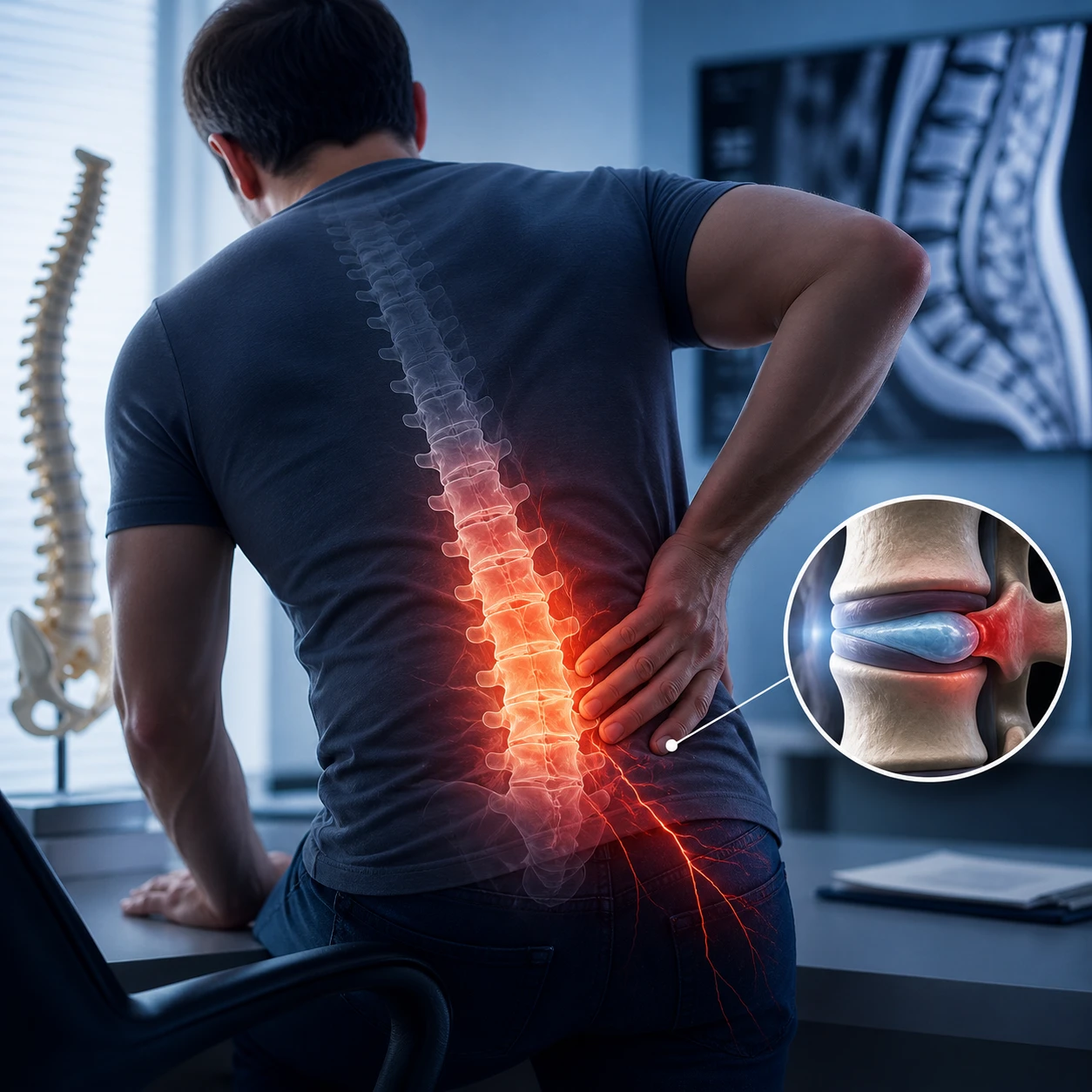
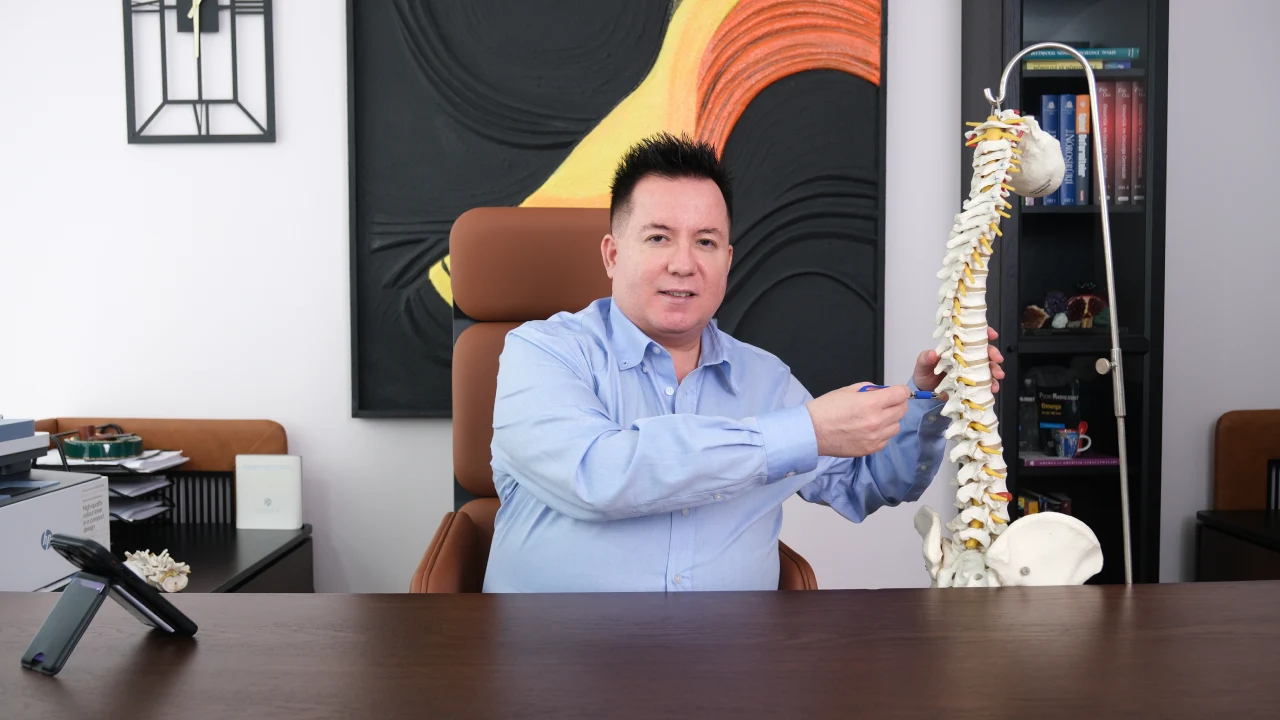
The lower back consists of five vertebrae and cushion-like structures called discs located between these vertebrae.
The lower back consists of five vertebrae and cushion-like structures called discs located between these vertebrae. It is responsible for transferring the load from the trunk to the pelvis and legs, as well as maintaining our posture. While supporting the trunk and allowing us to stand upright, it also enables bending movements in all directions. The vertebrae are connected to each other by disc cushions and joints called facet joints. In addition to these main connections, the supporting ligaments and muscle tissues around the vertebrae keep them firmly attached to one another. All these structures work in harmony to carry the body’s load, maintain an upright position, and allow certain movements. A healthy lower back, with all its structures functioning properly, does not cause pain.
Low back pain is a very common condition in adults. Approximately 80% of all adults experience at least one episode of low back pain during their lifetime. If all adults could be questioned at the same point in life, it would be seen that around 15% have low back pain at that time. Low back pain may occur due to trauma, lifting heavy objects, or an improper movement, but it may also develop without any known cause. The pain may start suddenly or gradually increase in severity. Low back pain may feel like a deep ache or a burning sensation. It may also be accompanied by pain radiating to one or both hips or thighs.
WHAT CAUSES LOW BACK PAIN?
Finding the true source of low back pain can be difficult. The disc itself, surrounding ligament and muscle tissues, facet joints and ligaments, and cartilage structures may all be sources of pain. Causes of low back and leg pain include:
- 1. Spinal cord-related causes
- – Multiple sclerosis
- – Spinal cord tumors (ependymoma, astrocytoma)
- 2. Nerve root compression-related causes
- – Disc herniation, lumbar stenosis, spondylolisthesis
- – Spondyloarthropathy
- – Metabolic causes (osteoporosis, Paget’s disease)
- – Spinal tumors (metastatic or primary)
- – Extra-spinal tumors (neurofibroma, meningioma, ependymoma)
- – Infections (brucellosis, osteomyelitis, discitis, tuberculosis)
- – Trauma
- – Congenital causes (perineural cyst, tethered cord syndrome)
- 3. Lower abdominal causes
- – Abdominal tumor
- – Retroperitoneal hematoma / infection
- – Pelvic fracture
- 4. Peripheral nerve-related causes affecting the leg
- – Diabetes mellitus
- – Trauma
- – Entrapment neuropathies
- – Tumor
The most common cause of low back pain is disc-related pain. With aging, the water content of the disc decreases. Due to structural changes, the distribution of the loads transmitted to the surrounding tissues changes. As a result, tears may occur in the annulus fibrosus layer, which has weakened due to minor trauma. All these changes may lead to disc-related pain. Since the spine segment functions as a whole, structural deterioration in the disc may also lead to pain originating from other structures. This process may result in the disc repairing itself, or it may lead to disc herniation, which can be described as the inner layer protruding toward the nerves. It may also cause conditions known as lumbar spinal stenosis or spondylolisthesis due to structural changes in the bone caused by impaired force distribution.
HOW LONG DOES LOW BACK PAIN LAST?
An episode of low back pain, regardless of the source of pain, usually resolves on its own after a certain period as the tissue repairs itself. Approximately 50% of low back pain cases decrease and resolve within 2 weeks, while 80% improve within 6 weeks. In 30% of people who have experienced one episode of low back pain, the pain may recur and become chronic. Low back pain that persists despite six weeks is considered chronic.
WHAT SHOULD BE DONE?
Although rare, low back pain may begin as a symptom of another disease. Therefore, it is useful for a person experiencing an episode of low back pain to consult a physician. The physician evaluates whether symptoms such as fever, sweating, or weight loss accompany the pain.
The natural course of low back pain is spontaneous recovery. However, to help the patient get through this painful period more comfortably, the physician may make certain recommendations. Short-term bed rest of up to 4 days, painkillers, and muscle relaxants are some of these recommendations. If the physician does not detect signs of another disease during this process, radiological examinations such as direct X-ray or magnetic resonance imaging are not necessary. If low back pain continues despite six weeks, radiological examination is performed.
In an acute pain episode, short-term bed rest may be beneficial because it reduces the load on the lower back. However, if bed rest exceeds 4 days, it may do more harm than good because the supporting muscles around the spine may weaken. Contrary to common belief, bed rest on a hard surface is not appropriate. What matters is that the surface on which the mattress is placed is firm. Almost all mattress models used today have this feature.
Pain-relieving medications recommended for low back pain treatment are generally anti-inflammatory drugs, which aim to block certain chemical mechanisms that cause the sensation of pain. Using these medications without a doctor’s recommendation is not appropriate, especially due to possible side effects on the digestive system. It is important to use these medications for the duration and dosage recommended by your doctor. The most important point to remember is that all medical treatments for low back pain do not eliminate the source of pain; they reduce the degree to which pain is felt. If the body’s repair mechanisms can heal the tissue causing the pain within up to 6 weeks, low back pain resolves.
WHEN IS THE CONDITION SERIOUS AND WHEN SHOULD YOU DEFINITELY SEE A DOCTOR?
- Low back and/or leg pain that does not resolve despite 6 weeks
- A feeling of loss of strength in the leg
- Difficulty urinating or holding urine
- Numbness involving the anal region
- Numbness or fatigue developing in one or both legs even during short-distance walking
Especially when difficulty urinating, numbness around the anal region, or significant loss of strength in the leg develops, there is an indication for urgent surgical intervention. In these cases, since the compression on the nerve tissue is severe, surgical intervention performed in the early period may help improve the complaints. As time passes, the likelihood of the complaints becoming permanent increases.
If you consult your physician with persistent low back and leg pain and no loss of strength is detected during the examination, your physician may recommend various treatment methods, including surgical intervention, in light of radiological findings. One of these treatment options will be chosen according to the severity of the pain and the extent to which it affects your life.